
How to Improve Sell-Through in Retail: The Brand Playbook
Sell-through rate is the percentage of inventory a retailer sells to customers compared to what they received from you in a given period. Ship 100 units, sell 70 to consumers inside the window, and your sell-through is 70%.
It's the number your retail partners grade you on. Strong sell-through earns reorders, better shelf position, and a bigger buy next season. Weak sell-through earns markdowns and a smaller order, and eventually the buyer's silence. If you're new to the metric, our glossary entry on sell-through covers definitions and math; this playbook covers what to do about it.
Why sell-through stalls even when the product is good
Most brands respond to soft sell-through by questioning the product or the price. Sometimes that's right. More often, the product is fine and the problem lives on the sales floor, in the last three feet of the sale. Your B2B ordering platform got the product into the store — we map that side of the channel in our wholesale tech stack guide — but what happens next comes down to three things:
- The associate doesn't know your product well enough to recommend it with confidence
- The associate knows it but has no particular reason to recommend yours over the brand next to it
- The customer never notices it because the display doesn't match the plan you invested in
Those three failure points map to the three drivers brands actually control from outside the store: knowledge, motivation, and presence. Every tactic in this playbook moves one of them.
Driver 1: Associate knowledge
For considered purchases (footwear, outdoor gear, electronics, sporting goods), the associate's recommendation is frequently the deciding vote. Customers walk in with a shortlist and walk out with what the person on the floor endorsed.
An associate recommends what they can explain. The distance between "we have that in stock" and "this is the one I'd buy, and here's why" is product knowledge, and it decays fast: seasonal associates turn over, assortments change, and your rep visits each door a few times a year at best.
What works:
Short, mobile, rewarded education. Associates won't sit through a 40-minute desktop course between customers, and completion data proves it: traditional retail learning tools routinely see completion under 50%. Modules built for a phone in 2 to 4 minutes, with a reward attached, reach 89% average completion on ENDVR. Format is most of the battle.
Teach the recommendation. An associate needs three things: who this product is for, what makes it different from the two next to it, and the one line that helps a customer decide. Fabric weights and feature lists don't survive to the sales floor; comparisons and customer-matching do.
Time education to the season. Ski product knowledge in October, trail running in March. Education that lands when the category conversation starts gets used; education that lands off-season is forgotten by the time it matters.
We've collected the full approach in our guide to training retail sales associates.
Driver 2: Associate motivation
Knowledge tells the associate what to recommend. An incentive gives them a reason to recommend yours, today, out of the dozens of brands they could mention.
Sales incentives are the most direct sell-through driver a brand has, because they act at the exact moment of decision. The design principles:
Pay per verified sale. Rewards for confirmed transactions drive selling behavior. Rewards for sign-ups or quiz completions drive sign-ups and quiz completions. Both have their place, but only one moves inventory.
Pay fast. A reward that lands the same day builds a recommendation habit. A check in six weeks is forgotten by the time it lands. Payout speed changes participation more than reward size in most programs we see.
Layer the structure. Cash on every verified sale is the base. Milestone tiers ("sell 10, earn more") and a grand prize on top turn a program into a season-long chase, and earned product prizes carry stories across the sales floor in a way flat payouts never do. Reward structure is covered in depth in how to structure retail incentive rewards.
Verify everything. Verification protects your budget and makes your results real. Receipt-based verification confirms product, store, date, and amount on every claim, which is what lets brands on ENDVR report an average of $26 in sell-through per $1 in rewards (methodology) and defend the program in a budget review.
Sequence education first. The strongest pattern across our network: brand education on a SKU, then an incentive on the same SKU. Knowledge plus motivation outperforms either alone. Stores that engage with both a brand's education and its incentives stay engaged at roughly 68%, against 39 to 45% for a single campaign type, and participating brands average a 41% same-store sales increase against matched control stores.
The mechanics of reward amounts, campaign windows, and store targeting are covered step by step in how to run a SPIFF program in retail.
Driver 3: In-store presence
The third driver is whether the store a customer walks into matches the plan you invested in. Displays get cannibalized for floor space, POP materials stay in the back room, and seasonal resets happen late or not at all. None of it is malicious; stores are busy and your display is one of forty priorities.
What works:
Verify with photos. A rep can physically check a fraction of your doors each month. Associates are already standing in all of them. Photo submissions of your displays, rewarded and reviewed, give you visual confirmation across the network in days. This is the job Display Maintenance does on ENDVR.
Fix the fixable. Photo verification sorts your network into doors that need materials, doors that need a conversation, and doors doing it right that deserve recognition. Each gets a different response, and all three beat not knowing.
Ask the floor what's happening. Associates see what your dashboard can't: which competitor is winning the recommendation, what customers ask for and don't find, how your pricing lands. Structured questions to the sales floor through Frontline Insights return market intelligence in 48 hours that would take a research firm weeks.
Reading the numbers: benchmarks and diagnosis
Healthy sell-through varies by category and season, but a working frame:
- Above 80% in-season: strong demand, and possibly an underbuy. Your risk shifts to stockouts.
- 50 to 80%: normal range for most specialty categories. Improvement territory: the three drivers move you up inside this band.
- Below 50% mid-season: intervention territory. Diagnose before discounting.
Diagnosis order matters, because the cheap fixes come first. Before touching price, ask: do associates in underperforming doors know the product (check education completion by store)? Do they have a reason to sell it (check incentive participation)? Is it displayed as planned (check photo verification)? Same-store comparisons across your network usually reveal the answer: when ten doors sell triple the rate of the other forty, the product isn't the problem.
Price promotion comes last, because it's the only move that permanently teaches customers your product goes on sale.
What this looks like in practice
Otis Eyewear ran education plus incentives across their dealer network and generated measurable sell-through lift they could see by store (case study). WPS, a distributor with 837 dealers, earned $72 in sell-through per $1 invested by pairing product education with verified-sale rewards (case study). Dragon Alliance used incentives to lift average selling price by $33, moving associates from the entry model to the right model (case study).
Different categories, same three drivers.
Where to start
If your sell-through needs to move this season: pick your five most important SKUs, run short brand education to the doors that carry them, follow with a verified-sale incentive on the same SKUs, and photo-verify your displays in the top 50 doors. Measure same-store change against the doors you didn't touch.
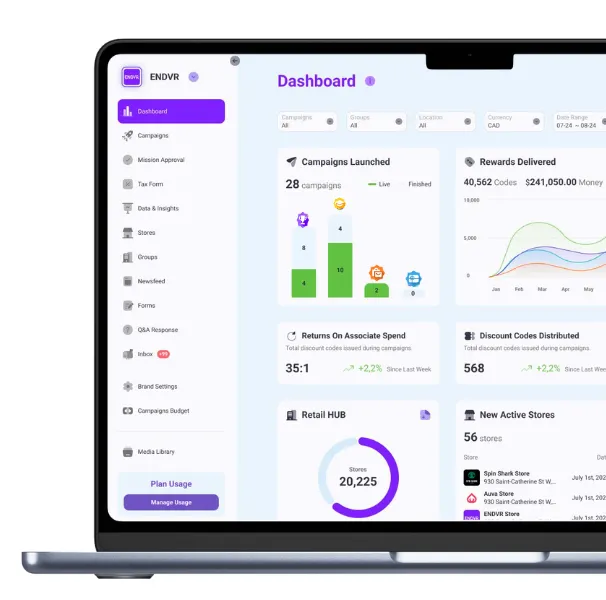
That entire sequence runs on ENDVR from one portal, and your first campaigns are effectively free: your first stores cost nothing, and your first $5,000 in verified incentive sales is on us. Get started or talk to a sell-through expert.
Ready to transform your retail strategy?
See how ENDVR can help you engage frontline retail teams and power sales.