
How to Run a SPIFF Program in Retail: A Step-by-Step Guide for Brands
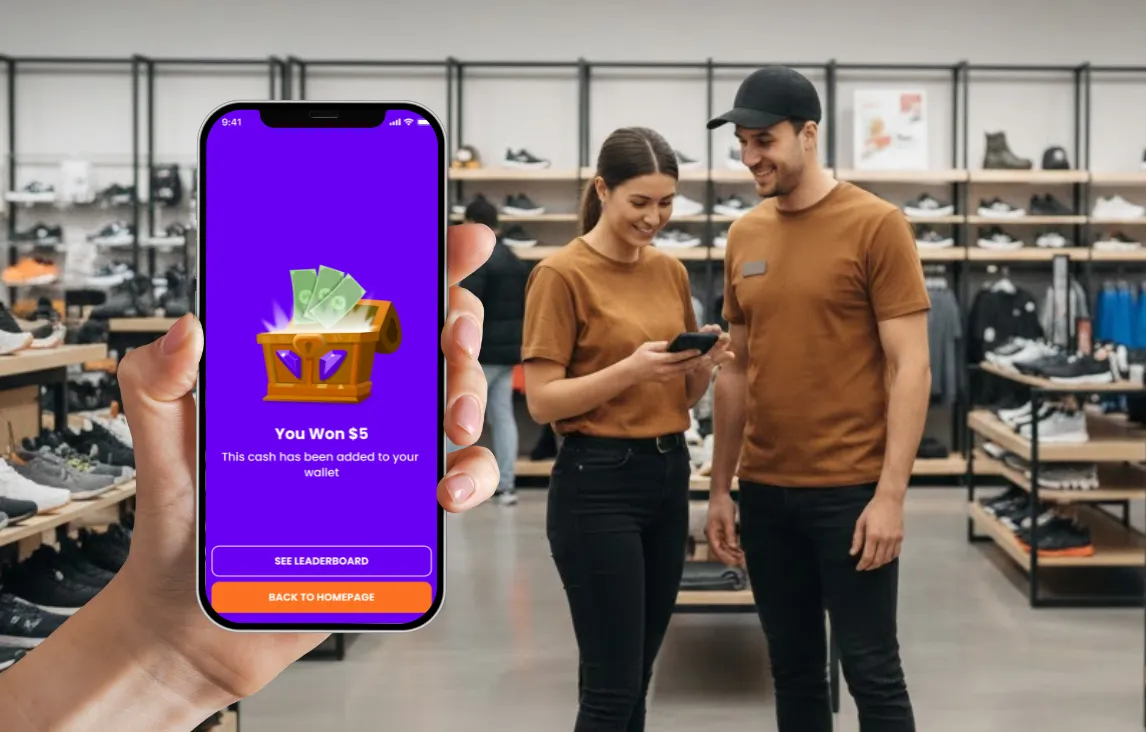
A SPIFF program rewards retail sales associates for selling specific products. Done well, it puts your brand at the front of an associate's mind at the exact moment a customer asks "which one should I get?" Done badly, it burns budget on rewards you can't connect to a single confirmed sale.
This guide covers the full process for brands selling through wholesale: planning, reward structure, launch, verification, and measurement. It draws on data from campaigns run across 15,000+ stores on ENDVR, and the principles apply whether you run your program on software or by hand.
What a SPIFF program is (and where the name comes from)
SPIFF stands for Sales Performance Incentive Fund. The practice is older than the acronym: manufacturers have paid shop-floor teams a premium for selling their products since at least the 1940s. The mechanics haven't changed much. What changed is that brands can now verify each sale and pay the associate the same day, which turns an act of faith into a measurable channel.
A SPIFF differs from a commission. Commissions are ongoing compensation paid by an employer. A SPIFF is a targeted reward paid by the brand, usually for a specific product over a specific window, to associates the brand doesn't employ. That last part shapes everything about how you run one.
Step 1: Pick the right products
The best SPIFF candidates share three traits:
The purchase involves a recommendation. SPIFFs work because associates influence considered purchases. A customer buying ski boots, a running shoe, or wireless headphones asks for guidance. A customer buying socks doesn't. Match your program to SKUs where the associate's voice moves the decision.
The margin supports the reward. A $10 reward on a $300 boot is a rounding error against the margin. The same $10 on a $40 item rewrites your unit economics. Most brands size the reward as a small share of retail price, larger where the sale takes real floor time.
You have a reason to push now. New launches, seasonal transitions, inventory you need moving before markdown season, or a competitive response. A SPIFF with a clear job outperforms a standing program that associates learn to ignore.
Step 2: Set the reward structure
Three decisions here: amount, form, and speed.
Amount. Across ENDVR campaigns, rewards of $5 to $50 per verified sale cover most categories. Price the reward against the effort of the sale as well as the margin. A technical product that takes fifteen minutes of floor conversation deserves more than a grab-and-go item.
Form. Match the reward type to the job. Cash is the fastest to go live and the easiest for associates to value, which makes it the right base for most programs. Product rewards take more coordination, and they buy something cash can't: an associate wearing your gear on the sales floor, and a story that travels across shifts. Discount codes deepen the relationship with associates who already want your brand, since they ask the associate to spend their own money. Whatever the mix, the associate should be able to state the value in one sentence.
Structure. The strongest programs layer their rewards: cash on every verified sale, a milestone at volume ("sell 10, earn more"), and a grand prize at the top. One watch brand ran four reward tiers, and the associates chasing the $800 watch at the 40-unit mark kept selling all season. Variable rewards turn a program into something the floor talks about rather than a transaction the floor forgets. We break reward structures down in detail in how to structure retail incentive rewards.
Speed. This is the most underrated variable in program design. A reward paid the day of the sale builds a habit. A check that arrives in six weeks builds resentment, and by the time it lands, the associate has forgotten which sale earned it. Instant payout is the single biggest advantage software-run programs have over manual ones.
Step 3: Decide how you'll verify sales
Every SPIFF program answers one question, well or badly: how do you know the sale happened?
Honor system. Associates report their own sales. Simple to run, and fine for tiny pilots with dealers you know personally. At any scale, unverifiable claims creep in, and your ROI reporting becomes fiction.
Retailer reporting. The retailer confirms sales from their POS. Accurate where it exists, but it depends on each retailer's willingness and systems, and independent dealers rarely have the team capacity to reconcile your program's claims.
Receipt verification. The associate submits a photo of the transaction receipt, and software confirms the product, store, date, and amount. This is how ENDVR verifies every claim, using AI to read the receipt rather than a human audit queue. It works at any store regardless of POS system, which matters when your network includes hundreds of independents.
The verification method determines what you can honestly report to your leadership. Brands on ENDVR average $26 in sell-through per $1 in rewards, and that figure is only possible to state because every underlying sale has a receipt behind it (how we calculate it).
Step 4: Launch to the right stores and people
Blasting every door in your network dilutes budget and attention. Segment instead:
- By sales results. Reward your strongest doors to deepen the relationship, or target underperforming regions where mindshare is the problem.
- By season. Ski shops in October, running stores in March. Align the window to when the category conversation is happening on the floor.
- By education. The highest-performing pattern we see: associates complete brand education on a product first, then a SPIFF follows on the same SKUs. Knowledge plus motivation beats either alone. Brands run this sequence on ENDVR by pairing Digital Education with Sales Incentives.
Keep the campaign window tight. Two to eight weeks concentrates attention. Programs that run indefinitely become wallpaper.
Step 5: Communicate like the associate is your customer
The associate chooses which brand's program to engage with the way a consumer chooses products: whatever is clearest and pays best wins. Your program brief should answer, in under thirty seconds:
- Which products count
- What the reward is
- How to claim it
- When and how they get paid
If claiming the reward takes longer than making the sale, participation dies. This is why paper claim forms and portal logins kill programs: the associate is mid-shift, on a sales floor, with a phone in their pocket. Meet them there.
Step 6: Measure sell-through, then adjust
Track four numbers weekly during the campaign:
- Verified sales volume by store and region
- Sell-through per reward dollar (total verified sales value divided by rewards paid)
- Participation rate (active claiming associates versus reached associates)
- Top performers (which stores and associates drive volume)
The store-level view is where the insight lives. When one region outsells another three to one, you've learned something about distribution, education, or competition that no aggregate report would show. Mid-campaign adjustments (raising a reward, extending a window, adding stores) are often the difference between a quiet campaign and a strong one.
After the campaign, compare same-store sell-through during the window against your baseline. Across ENDVR campaigns, participating brands see a 41% average sales increase against matched control stores, with individual results ranging from 18% to 70% depending on category and program design.
The five mistakes that sink SPIFF programs
Paying slowly. Covered above, and worth repeating: payout speed is part of program design, and it deserves the same attention as reward amounts.
Rewarding sign-ups instead of sales. Rewarding enrollment or quiz completion has its place in education programs, but a SPIFF pays for confirmed transactions. Mixing the two muddies your data.
No verification. An unverified program can't be defended in a budget review. When leadership asks what the investment returned, "associates told us they sold a lot" ends programs.
Set-and-forget. Launching and checking back at the end forfeits the mid-campaign gains that live reporting makes possible.
Ignoring the retailer. The store manager decides whether your program gets floor talk-time. Programs that make managers' teams money get championed; surprise programs get shrugged at. Give managers visibility and they become allies.
Running it manually versus on software
You can run a small SPIFF by hand: a PDF announcement, an email inbox for receipt photos, a spreadsheet, and Venmo. For five dealers and one campaign a year, that's honestly fine.
The manual approach breaks at scale in predictable places: verifying receipts eats hours, payouts lag, nobody can see results by store, and the second campaign never launches because the first one was so much work. We've written an honest comparison of in-house programs versus ENDVR covering where the line sits.
On ENDVR, a campaign goes from brief to live in minutes: pick SKUs, set the reward, choose stores and dates, publish. Associates see it in the app, sales verify automatically, rewards pay instantly, and your dashboard shows sell-through by store in real time. Your first $5,000 in verified sales is free, which is deliberately enough room to run a real pilot and see your own numbers before investing anything. To model a program before you launch one, the Sales Incentive ROI Calculator converts your MSRP, reward, and budget into projected verified sales and fees.
Frequently asked questions
How long should a SPIFF program run? Two to eight weeks for most goals. Long enough for word to spread across shifts, short enough to stay urgent. Seasonal businesses often run three or four windows a year rather than one continuous program.
Are SPIFF payments taxable for associates? Yes. In the US, rewards to non-employees are generally reportable income (1099 territory above $600 per year from one payer). Software programs handle the reporting; manual programs need to plan for it. This is general tax information; loop in your finance team before you launch.
Do retailers allow brands to run SPIFFs with their teams? Most specialty retailers welcome programs that make their teams money and their categories move, and some negotiate them into vendor agreements. A minority of retailers prohibit them. Check your dealer agreements, and when in doubt, ask the store manager. Transparency beats surprises.
What participation rate should I expect? On ENDVR, campaigns paired with brand education and instant payouts see the strongest engagement across the 140,000+ associates on the network. Unpaired campaigns with slow payouts can see participation stall in the single digits. The variables you control matter more than the category average.
Ready to run your first program with every sale verified? Launch your first incentive, or read how brands like WPS earn $72 per $1 invested.
Ready to transform your retail strategy?
See how ENDVR can help you engage frontline retail teams and power sales.